Yuletide Creatures: Winter’s Elves, Ghosts, and Wild Folk
Winter settles in. The veil feels thin. Across northern Europe, people once filled the darkest stretch of the year with firelight, feasts, and stories of strange visitors wandering between worlds. Yuletide is not only candles and delicious cinnamon cookies. It is tangled roots and wild folklore, filled with beings who help, warn, punish, bless, tease, or simply pass through while the nights are long.
You’re about to meet the winter guests who slip in and out with the cold. Some show up with a little humor. Others feel strange enough to raise the hair on your arms. A few simply invite stillness and reflection. All of them remind us that this season once held far more mystery than lights, songs, and sugar.
What Are Yuletide Spirits
Before Christianity folded into winter traditions, people faced a long, cold season with little sunlight. Stories kept them company. These myths explained strange noises in the night or the feeling of being watched in the woods. They also served as gentle lessons. Keep your word. Honor your household. Share your food. Show kindness. Survive together.
These beings lived alongside humans for only a short time each year. Some came with the snow. Some joined the Wild Hunt. Some slipped into kitchens to test good manners or to help with chores. Others brought mischief and fear. Their lessons vary from region to region, but their presence echoes everywhere the cold settles in.
The Álfar: Winter Elves of the North
In older Norse belief, elves were not tiny twinkle-creatures. They were powerful, ancestral forces tied to nature and land. Some brought healing and protection. Others were fickle or territorial. During the winter, the Álfar were honored with offerings of food and drink. Families lit candles and left bowls outside to keep these unseen neighbors peaceful.
The elves were not distant figures. They might live beneath hills or within old trees. If treated with respect, they could offer blessings. If neglected, they reminded humans that all living spirits deserve care. Stillness, reverence, and good intention were the best approaches.
Tomte and Nisse: The Hearth Guardians
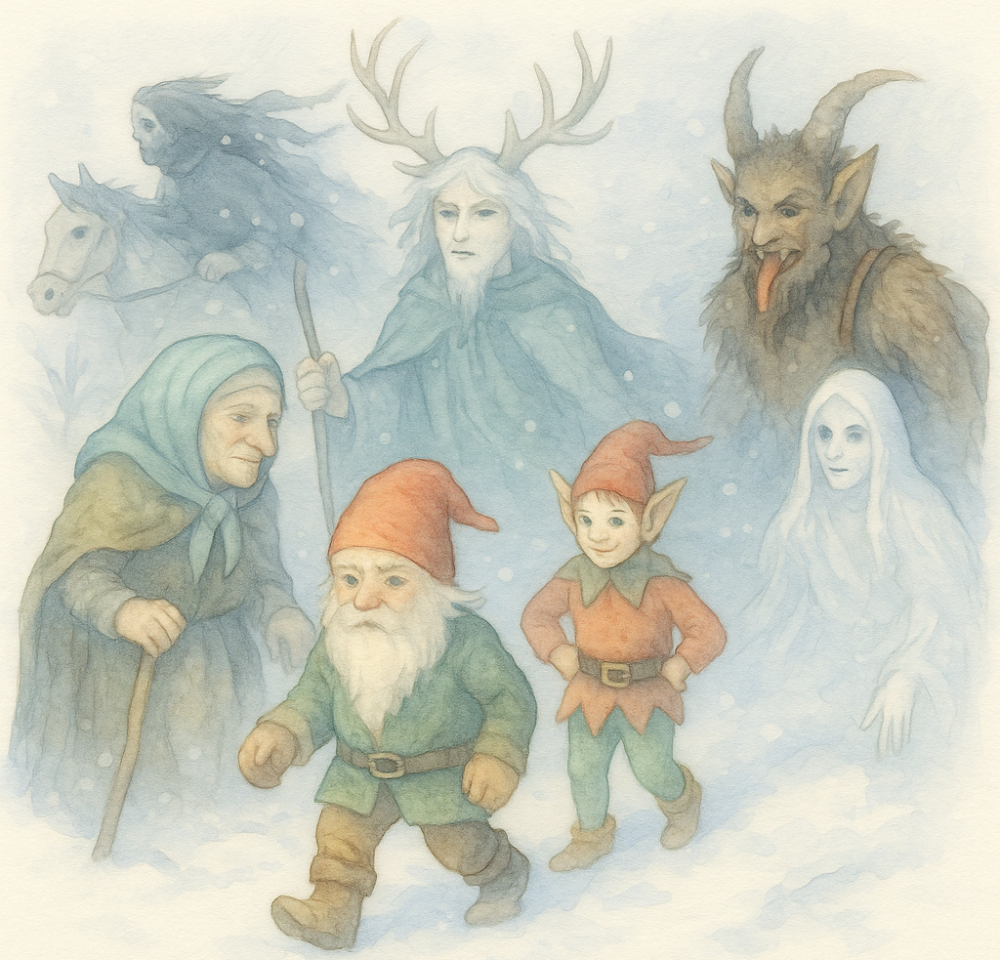
In Scandinavia, every farm and household welcomed a small winter helper. The tomte or nisse is a house spirit who watches over animals, tools, and sleeping families. Their appearance shifts from story to story, but people imagined them as small beings with wool caps and quick temperaments.
They help only when respected. A bowl of porridge might keep them happy through the night. Ignore them, and chores may go strangely wrong. Animals might act restlessly. Tools might vanish. Children taught to share and show gratitude learned the deeper heart of winter: survival depends on caring for one another.
Krampus: The Shadow of Winter
Not every winter visitor is gentle. Krampus storms in behind Saint Nicholas, reminding children that rewards and consequences walk side by side. Cloven hooves. Horned head. A figure of a winter night. He punishes cruelty and selfishness. He is fear given fur and teeth, warning that good behavior keeps the darkness at bay.
Krampus belonged to Alpine traditions long before he became a meme. He is not evil. He is balance. Light is easier to understand when you have seen the dark.
Gryla and the Yule Lads
High in Iceland’s legends lives Gryla, a powerful wild woman who haunts the snowy mountains. She listens to badly behaved children. The tale is dramatic. She collects the ones who ignore warnings and wander where they should not.
Her sons, the Yule Lads, visit homes one by one in the nights before Yule. Each has its own strange habits. Some steal food. Some peek through windows. Others cause mischief just because they can. They are chaotic, never boring. Some stories make them terrifying. Modern tales have softened them into playful troublemakers who leave small gifts.
The Yule Cat
Iceland has another winter creature. A huge cat with glowing eyes prowls the snow on Yule Night. It watches who has new warm clothing. The story encouraged community care. In long winters, having proper clothing meant survival. The Yule Cat rewarded generosity and preparation. Those who shared with others were safe. Those who hoarded or neglected their neighbors risked a visit.
The Wild Hunt
Midwinter once carried a deep shiver. People believed that a ghostly procession rode across the sky. Warriors, spirits, and lost souls thundered with great speed. Winds howled. Dogs barked at nothing. You hid indoors, as quietly as possible. Seeing the Hunt was rare but dangerous. Souls could be swept away.
This story appears in many regions under different names. Sometimes the leader is Odin. Sometimes a dark rider. Sometimes, a mortal king trapped between worlds. The message remains. Winter is powerful. Respect the unseen.
Mari Lwyd
In Wales, a skeletal horse draped in ribbons and fabric travels between homes. The Mari Lwyd brings song, riddles, and eerie beauty. People welcome her with music and wit. If she wins the poetic contest, she may enter the home to bless it. Her presence is strange but joyful. She carries the old year out and invites life to return.
Perchta
In the Alpine regions, Perchta wanders during the Twelve Nights of Yule. Sometimes beautiful. Sometimes frightening. She rewards those who work honestly and honor the winter quiet. She punishes greed and deceit. Her dual nature teaches that winter holds both life and death. Do your work. Rest with intention. Be honest.
Why These Spirits Matter
Winter used to be dangerous. Food ran low. Storms isolated villages. Children spent months indoors. These stories helped people cope. They explained fear. They taught respect for nature and community. They added mystery to cold nights. They reminded everyone that even in darkness, there is wonder.
Yuletide spirits carry old lessons into modern life.
Share what you have.
Honor ancestors.
Respect the land and the season.
Offer warmth to others.
Beware of pride.
Protect your home.
Keep your promises.
They teach that magic, protection, and danger exist side by side. Winter invites us inward. The world slows. We listen.
Closing Thoughts
Yuletide folklore is a wild garden. It has humor and horror. Softness and claws. These beings wander through our deepest stories, whispering that we are never truly alone during the long night. Whether you celebrate with candles, feasts, or quiet reflection, you walk in the company of ancient spirits.
Remember them with respect.
Honor the season.
And welcome the light when it returns.